

Electrical Safety Tips Every Homeowner in Lakewood, WA Should Know
Tacoma’s First Choice for Electrical Work
From the licensed electricians at Skipper & Sons Electric
Your home should be a place of comfort and security, not electrical hazards. The electrical system powering your Lakewood, WA home works hard every day, and when it’s not maintained properly, hidden dangers can develop. At Skipper & Sons Electric, we’ve seen firsthand how small electrical issues can turn into costly repairs or even house fires. That’s why we put together this easy-to-understand guide to help you protect your family and your property.
Whether you’re preparing for wet Pacific Northwest winters, summer outdoor projects, or everyday living, these electrical safety tips are essential for every homeowner.
Call (253) 317-58651. Don’t Ignore Electrical Warning Signs
Your electrical system talks, you just have to know the signs. Ignoring early warnings can lead to bigger problems down the road.
Watch for:
- Flickering or dimming lights
- Buzzing sounds from outlets or switches
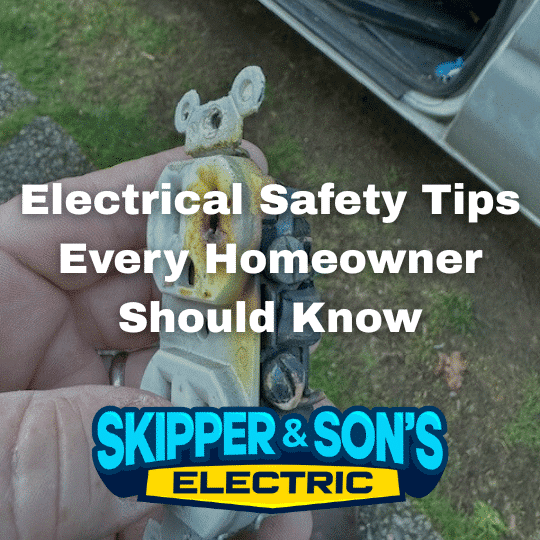
- Warm or discolored outlets and faceplates
- Frequent breaker trips
- Burning smells
These are signals that something isn’t right. Flickering lights may mean loose wiring. Warm outlets could point to overloaded circuits. And burning odors are never normal — they’re often the first sign of an electrical fire hazard.
Tip: If you notice any of these, don’t wait. Call a licensed electrician to inspect your system.
2. Avoid Overloading Outlets and Circuits
Modern homes run more devices than ever before, from smart TVs and gaming consoles to space heaters in winter. But every circuit has a limit.
What to do:
- Spread appliances across multiple outlets
- Avoid using multiple high-draw appliances (like microwaves and space heaters) on the same circuit
- Upgrade old two-prong outlets to grounded three-prong outlets
- Consider adding circuits if your breaker trips often
Never daisy-chain extension cords or power strips. They’re meant for temporary use, not as permanent wiring.
3. Install the Right Protection: GFCIs & AFCIs
Your home’s electrical safety isn’t just about avoiding hazards; it’s about preventing them.
- GFCIs (Ground Fault Circuit Interrupters) protect against shock in wet areas like kitchens, bathrooms, garages, and outdoors.
- AFCIs (Arc Fault Circuit Interrupters) are designed to detect dangerous electrical arcs — a common cause of electrical fires.
Washington state and national electrical codes require these safety devices in many parts of the home. If your home was built before these codes were adopted, you may not have them installed, and that’s a safety gap worth closing.
4. Be Cautious With DIY Electrical Work
We get it, DIY projects can be fun and cost-effective. But electrical work is one area where mistakes can be dangerous.
Why DIY can be risky:
- Electrical codes are complex and always changing
- Improper installations can void insurance
- Loose connections and faulty wiring can cause fires
A licensed electrician from Skipper & Sons Electric knows how to do the job safely and up to code, ensuring peace of mind for you and your family.
5. Keep Electricity and Water Far Apart
Lakewood’s rainy season means more moisture around the house, and moisture and electricity don’t mix.
Safety tips:
- Make sure all outdoor and wet-area outlets are GFCI-protected
- Seal outdoor boxes and outlets with weatherproof covers
- Keep cords and plugs dry when working outside
- Avoid running cords through puddles or wet grass
Water exposure increases the risk of shocks, shorts, and electrical fires, so take moisture seriously.
6. Use Extension Cords Safely (or Avoid Them)
Extension cords are convenient, but they’re not a substitute for proper wiring.
Safe use tips:
- Only use cords temporarily
- Choose cords rated for outdoor use if used outside
- Don’t run cords under rugs or furniture
- Avoid powering high-draw appliances with extension cords
If you find yourself using extension cords often, it may be time to add new outlets, a simple upgrade that improves safety and convenience.
7. Test Safety Devices Regularly
Your safety devices only protect you if they’re working properly.
Check regularly:
- Smoke alarms: at least once a month
- Carbon monoxide detectors: per manufacturer recommendation
- GFCIs: Use the built-in “Test” and “Reset” buttons monthly
Replace batteries as needed and don’t ignore chirping alarms; it’s your system telling you something needs attention.
8. Plan for Electrical System Upgrades
Homes in Lakewood and surrounding areas may be older and still have outdated electrical systems that weren’t designed for today’s power demands.
You might need an upgrade if:
- Your breaker panel is outdated or only has fuses
- You have two-prong outlets
- You frequently trip breakers
- You’re adding major appliances, EV chargers, or HVAC upgrades
Upgrading your electrical panel can improve safety, support modern devices, and reduce fire risks.
9. Know When to Call a Professional
Some electrical issues should never wait for a weekend project or YouTube tutorial.
Call a licensed electrician right away if you have:
- Sparks or smoke from an outlet or panel
- Repeated breaker trips
- Burning smells coming from outlets
- Warm or melted outlets/switches
- Water intrusion near electrical components
Your family’s safety is worth professional care, and that’s what Skipper & Sons Electric is here for.
10. Schedule Regular Electrical Safety Inspections
Just like HVAC, plumbing, or roof maintenance, your electrical system deserves regular check-ups.
During an electrical safety inspection, a licensed technician will:
- Check wiring condition throughout the home
- Test outlets and safety devices (GFCI/AFCI)
- Inspect the breaker panel for signs of wear or age
- Ensure circuits are properly balanced and grounded
Routine inspections help catch small issues before they become major hazards, saving you money and protecting your home.
Final Thoughts: Safety First with Skipper & Sons Electric
Electrical safety isn’t something to take lightly — especially with the rainy seasons, older homes, and heavy power demands we see in Lakewood, WA, and the surrounding Pierce County communities.
At Skipper & Sons Electric, we’re committed to keeping your home safe, reliable, and up to code. From safety inspections and outlet upgrades to full panel replacements and code-compliant installations, we’ve got your electrical needs covered.
Ready to make your home safer?
Contact us today to schedule your electrical safety inspection or upgrade consultation!
Frequently Asked Questions About Electrical Safety
Q: How often should I have an electrical safety inspection?
A: Every 3–5 years is a good rule, or sooner if your home is older or showing warning signs.
Q: Are flickering lights dangerous?
A: Yes, flickering can signify loose wiring or overloaded circuits and should be checked.
Q: What’s the difference between GFCI and AFCI outlets?
A: GFCIs protect against shocks in wet areas; AFCIs prevent electrical arcs that can start fires.
Q: Can I do electrical work myself?
A: Minor outlet-replacement tasks are simple, but most electrical work should be handled by a licensed professional for safety and code compliance.
Our Service Areas
 All Service Areas